
Overview
This case study highlights a comprehensive 360-degree marketing campaign I developed and executed for a data science company in California.
Goals and Objectives
Drive brand awareness, boost lead generation, and expand market reach
Strategy and Tactics
Search engine optimization (SEO), pay-per-click (PPC) advertising, content marketing, social media marketing, email marketing, influencer partnerships, or other relevant channels and techniques.
Implementation
Execution of the digital marketing campaign involved meticulous planning and utilization of various platforms and tools. The steps taken to implement the campaign were as follows:
- Team Coordination: As the campaign lead, I managed and coordinated a team of content creators responsible for executing the marketing strategy. This involved assigning roles and responsibilities, establishing effective communication channels, and ensuring clarity on the campaign’s objectives.
- Platform Selection: To achieve optimal campaign results, a range of digital marketing platforms was employed. These included SEMRush, Ahrefs, Moz, SERanking, UberSuggest, and various Google Marketing Tools such as Ads, Tag Manager, Keyword Planner, Search Console, Analytics, and GMB. Additionally, HubSpot was utilized to streamline campaign management.
- Content Creation Processes: To maintain consistency and enhance content quality, several processes were established. Content templates were developed, ensuring a cohesive brand identity across different channels. In-depth keyword research was conducted to identify relevant and high-performing keywords. Topic clusters and content pillars were established to organize content creation and interlinking strategies.
- Timeline: The entire campaign was executed within a timeline of three months, excluding the 1-month research. This timeframe was carefully planned to allow for sufficient research, content creation, implementation of marketing tactics, and monitoring of results. Adherence to the timeline ensured the campaign’s timely execution and maximized its effectiveness.
Target Audience
Through extensive research and data analysis, we identified key demographic, psychographic, and professional characteristics that defined our target audience. This allowed us to create tailored marketing messages and deliver personalized experiences that resonated with our ideal customers, driving engagement and conversion rates.
Metrics and Analytics
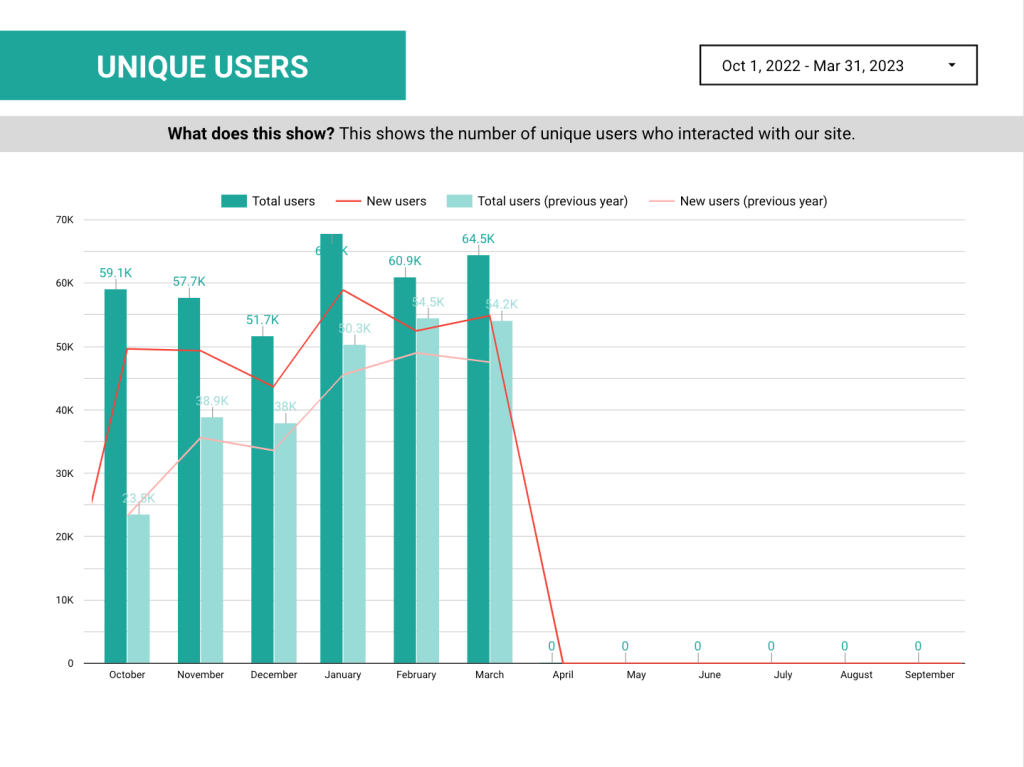
Created a Looker Studio tracker to present website traffic, click-through rates (CTRs), conversion rates, engagement metrics, social media reach, and several other KPIs.
Results and Impact
Year-on-Year Comparison
Here’s a tabular summary comparing the data on unique site users for January, February, and March in 2022 and 2023, along with the percentage increase:
| Month | 2022 Unique Users | 2023 Unique Users | Percentage Change |
|---|---|---|---|
| January | 50,300 | 67,800 | 34.80% Increase |
| February | 54,500 | 60,900 | 11.75% Decrease |
| March | 54,200 | 64,500 | 19.03% Increase |
The overall percentage change in unique site users from 2022 to 2023 is approximately 21.86%. This indicates an overall positive growth trend in user engagement during this period.

Quarter-on-Quarter Comparison
Here’s a tabular summary comparing the data on unique site users for the months of October, November, and December in 2022, along with the data for January, February, and March in 2023:
| Month | 2022 Unique Users | 2023 Unique Users | Percentage Change |
|---|---|---|---|
| October | 59,100 | ||
| November | 57,700 | ||
| December | 51,700 | ||
| January | – | 67,800 | 14.64% Increase |
| February | – | 60,900 | 5.54% Increase- |
| March | – | 64,500 | 24.75% Increase |
The overall percentage change in unique site users from 2022 to 2023 is approximately 14.98%.
Challenges and Lessons Learned
Our campaign achieved success across various marketing efforts, except for one area – Google Ads. However, this setback provided valuable insights, revealing that our product is not well-suited for effective sales through Google Ads. On a positive note, this realization helps us refine our marketing strategy and focus on channels more aligned with our product’s characteristics and target audience.
Conclusion
Overall, the success of this campaign highlights the importance of strategic planning, targeted messaging, and utilizing the right mix of digital marketing channels to achieve desired marketing objectives. By continually evaluating and refining our strategies, I can adapt to challenges and optimize my efforts to drive sustained growth and success for the data science company.

 SEO with SARAH